

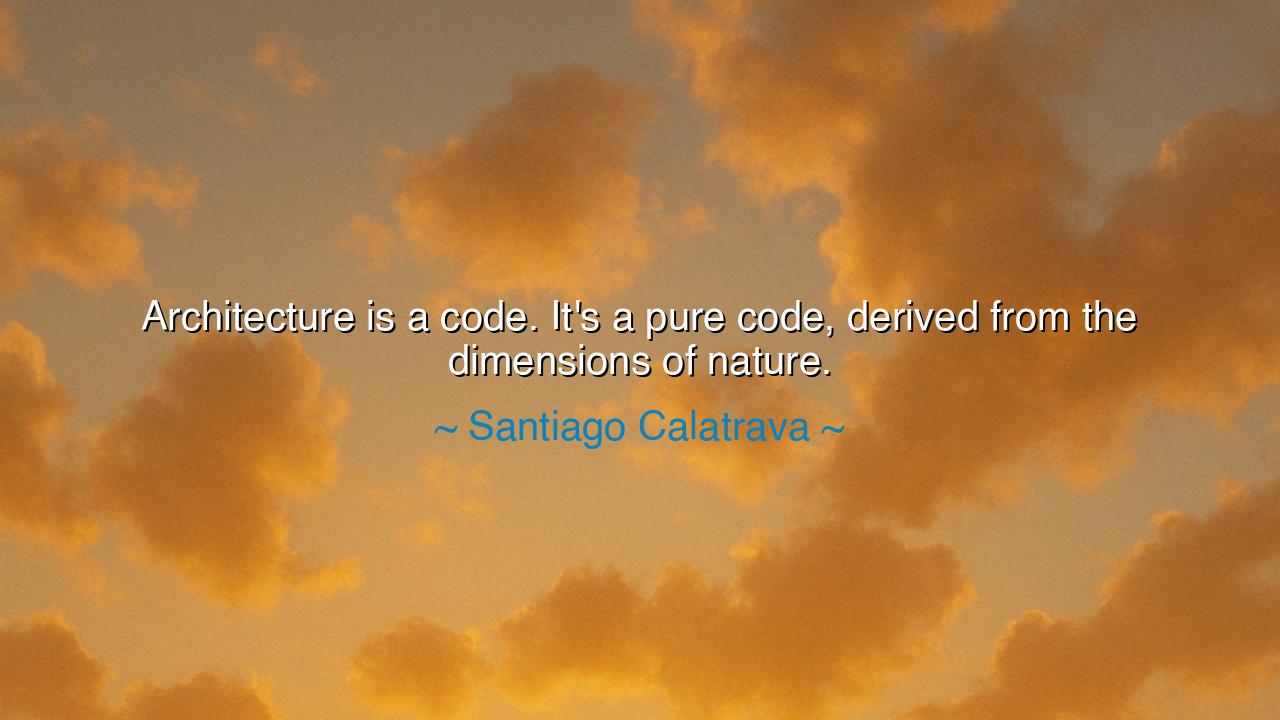
Architecture is a code. It's a pure code, derived from the









Host: The night sky arched over the city like a cathedral made of glass and silence. The river below reflected its lights in trembling ribbons, each building glowing like a heartbeat of mathematics — logic made luminous.
In a quiet corner of the city’s architectural district, an unfinished model sat beneath a single work lamp. The skeletal frame of a building — white, delicate, deliberate — rose from its base like something halfway between a cathedral and a bird’s wing.
Jack stood over it, sleeves rolled, blueprints spread like constellations across the drafting table. His eyes were sharp, but distant — the kind of stare that wasn’t looking at what was, but at what could be.
Across from him, Jeeny leaned on the edge of the table, her hair loose, her tone curious, her gaze moving between the paper and the man.
Between them lay a small card, handwritten, smudged by graphite and time:
“Architecture is a code. It’s a pure code, derived from the dimensions of nature.”
— Santiago Calatrava
Host: The words glowed faintly under the lamp — both poetic and mathematical, both divine and human.
Jack: “A pure code,” he said quietly. “That’s the part that gets me. Purity. Nothing else we make comes close.”
Jeeny: “Because architecture pretends to be eternal. It reaches for something the rest of us only write about.”
Jack: “No, it’s not pretending. It’s translating. That’s what Calatrava meant. The proportions of the human body, the curve of a bird’s wing, the tension of a bridge — it’s all language. We just build it.”
Jeeny: “You make it sound holy.”
Jack: “It is. You stand under a dome that fits the sky, or walk through a corridor lit exactly like morning, and you feel something greater — not religion, not reason, just… recognition.”
Host: The wind slipped through the half-open window, rustling the blueprints, brushing across the model until it seemed almost alive — as if breathing.
Jeeny: “Recognition of what?”
Jack: “Of harmony. The same code that runs through seashells, galaxies, bones — it runs through arches, too. The Fibonacci sequence isn’t just math. It’s memory.”
Jeeny: “Memory of what we were built from.”
Jack: “Exactly.”
Host: The lamplight trembled, the faint hum of electricity filling the quiet — the only sound other than their breathing.
Jeeny: “You know, I think architecture might be the most arrogant art there is.”
Jack: “Arrogant?”
Jeeny: “Yes. Every time you draw a line, you’re telling the world, ‘I can improve upon nature.’”
Jack: “No. You’re telling it, ‘I’m listening.’ Architecture doesn’t compete with nature. It borrows its grammar.”
Jeeny: “Then why do so many buildings look like noise?”
Jack: “Because too many architects forgot how to listen. They build for spectacle, not for sound.”
Host: Jeeny smiled faintly, her eyes soft but sharp.
Jeeny: “So you think nature’s a code, and architecture’s the translation?”
Jack: “Yes. Every curve, every dimension, every proportion — they’re echoes. You think you’re designing a roof, but you’re really sketching a leaf upside down.”
Jeeny: “And when we forget that?”
Jack: “We make concrete forests that block the sun instead of calling it in.”
Host: Outside, a train rumbled by, distant and low, its rhythm blending with the sound of the river. Inside, the model’s shadow stretched long across the table — a skeleton of light and intention.
Jeeny: “You know, Calatrava’s bridges always looked alive to me. Like muscles caught mid-motion.”
Jack: “That’s no accident. He studied anatomy before architecture. That’s why his buildings move like bodies — they have posture, balance, grace. He builds with bone logic.”
Jeeny: “Bone logic.” She laughed softly. “That’s beautiful.”
Jack: “It’s truth. You look at a bridge and think it’s still, but it’s carrying motion. Weight. Tension. The invisible becomes visible — that’s the real art.”
Host: Jeeny walked slowly toward the model, running her fingertips lightly along the curve of the frame.
Jeeny: “So if architecture’s a code, then what’s it saying?”
Jack: “That existence wants symmetry, but life keeps breaking it — and somehow, both are beautiful.”
Jeeny: “So we build not to perfect nature, but to remember it.”
Jack: “Yes. To speak its language before we forget how.”
Host: The light shifted, glowing warmer now — gold touching steel, warmth meeting precision.
Jeeny: “You know, Jack, that’s why I could never do what you do. Writing gives me freedom, but architecture gives you responsibility. Every line you draw becomes someone’s horizon.”
Jack: “And every word you write becomes someone’s foundation. Don’t sell yourself short.”
Jeeny: “Maybe. But I envy your kind of permanence.”
Jack: “Permanence is an illusion. Even stone decays. But code — code survives. You build something in proportion to truth, and it lasts longer than material. That’s why the Parthenon still speaks. It’s not stone. It’s syntax.”
Host: The wind pressed through again — this time colder, sharper. The model creaked faintly, as if reacting to its own meaning.
Jeeny: “You think people can live coded lives too? Like architecture — in harmony with nature’s dimensions?”
Jack: “They should. But we’re too busy breaking rhythm. We build lives of excess — no balance, no geometry, no grace.”
Jeeny: “So maybe we need to start designing our days the way you design a building. With light, proportion, and purpose.”
Jack: “And humility. Always humility.”
Host: A small silence followed — the kind that feels like agreement, not absence. The clock on the wall ticked once, twice, a sound precise as a heartbeat.
Jeeny: “You know what I love about Calatrava’s idea? It’s that he sees architecture as language, not monument. Code implies communication — not dominance. Maybe architecture isn’t about permanence after all. Maybe it’s about conversation — between humans and the world.”
Jack: “Yes. Between gravity and grace.”
Jeeny: “And between what we build and what we destroy.”
Jack: “Exactly. Every building’s an answer to a question nature never asked.”
Host: The camera would linger on them now — two figures illuminated by the golden cone of light, surrounded by paper, shadow, and half-dreamt structures.
Outside, the river’s reflection shimmered against the window, rippling like breath.
Jack: “You know, sometimes I think architects are just translators trying to write poetry in stone — but nature keeps editing the drafts.”
Jeeny: “And thank God she does.”
Jack: smiling faintly “Why’s that?”
Jeeny: “Because perfection’s boring. But proportion — proportion feels alive.”
Host: The lamp hummed, the model stood still, and for a brief, sacred second, it felt as though the building itself was listening — aware of being spoken about, aware of being understood.
And as the night deepened, Santiago Calatrava’s words seemed to breathe through the room — not as theory, but as heartbeat:
That architecture is not invention,
but translation.
That the geometry of the world is not to be conquered,
but remembered.
And that to build truly,
is to write in the same language as the sea,
the leaf,
and the human heart —
each a code,
each eternal,
each reaching upward in the same quiet symmetry
toward the idea of beauty that never forgets where it came from.

AAdministratorAdministrator
Welcome, honored guests. Please leave a comment, we will respond soon