

Between stimulus and response there is a space. In that space is
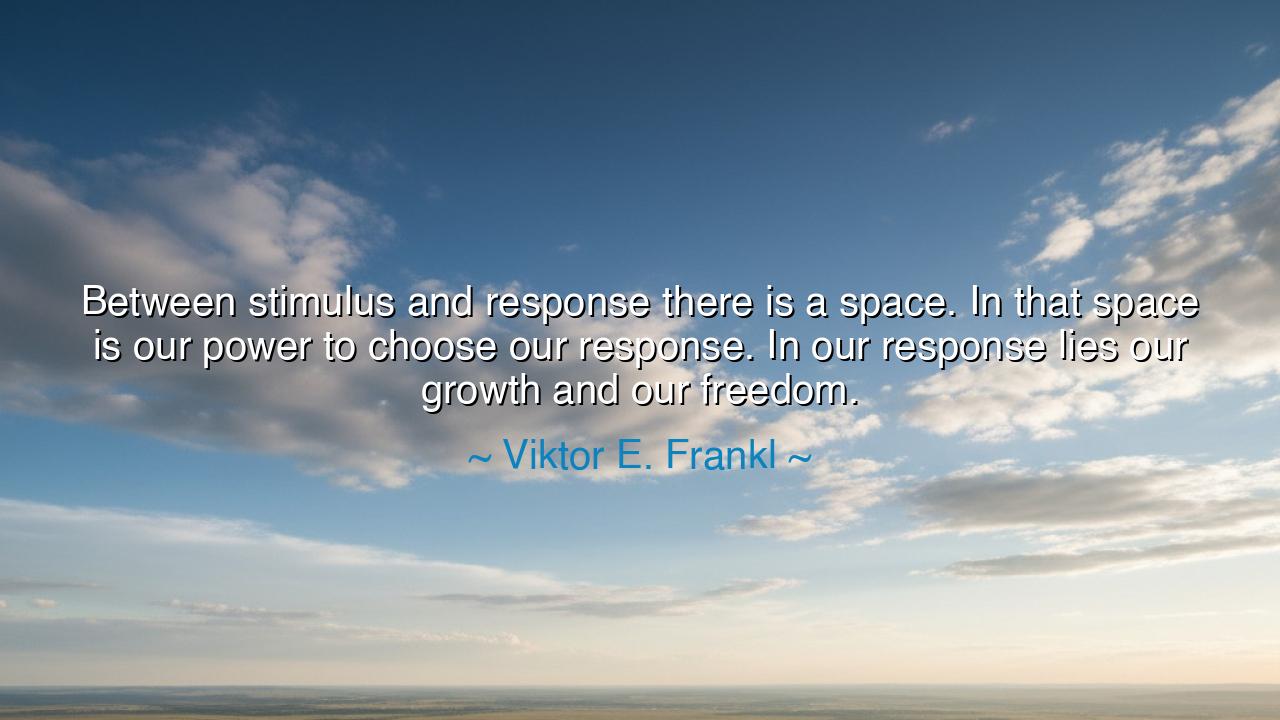
Between stimulus and response there is a space. In that space is our power to choose our response. In our response lies our growth and our freedom.










Host: The night was cold and thin, stretched over the city like a worn blanket of fog. A narrow alley hummed with the faint buzz of neon, its light bleeding across puddles that mirrored the world in fractured reflections. A small 24-hour diner sat at the end of the alley — the kind where time seemed to pause, and people came not for food, but for silence.
Inside, the air was thick with the smell of coffee and nostalgia. A half-working jukebox whispered an old jazz tune — something distant, like a memory still trying to remember itself.
At the counter, Jack sat hunched over a cup of black coffee, the steam curling around his face like unspoken thoughts. His grey eyes looked tired, but sharp — eyes that had seen too much of the world to trust it easily.
Jeeny sat beside him, stirring her tea slowly, watching the swirling liquid as if it held answers.
Jeeny: Softly, without looking up. “Viktor Frankl once said, ‘Between stimulus and response there is a space. In that space is our power to choose our response. In our response lies our growth and our freedom.’”
Jack: He let out a short, bitter laugh. “Yeah, I’ve heard that one. Sounds noble — until you’re actually in that space, choking on anger or fear. Then it’s not power, it’s paralysis.”
Host: The neon light flickered through the window, painting faint red scars across the countertop. Outside, a distant siren wailed — then faded into the night.
Jeeny: “You think choice disappears when pain enters the room?”
Jack: “I think choice is a luxury. You lose your job, your partner leaves, someone you love dies — that so-called ‘space’ collapses. There’s no freedom there. Just reaction. Survival.”
Jeeny: “But that’s exactly when freedom begins, Jack — in how we meet what breaks us. Frankl wasn’t writing from comfort; he was writing from Auschwitz. If he could find choice there, what excuse do we have?”
Host: Jack froze for a moment, her words landing like quiet thunder. The diner’s light buzzed overhead, steady and cruel.
Jack: “Frankl was a psychiatrist, not a god. He could intellectualize suffering because it gave him something to hold onto. Most people don’t have that kind of strength.”
Jeeny: “It’s not about strength — it’s about awareness. That space between what happens to us and what we do next — that’s all we really have, Jack. That’s where we decide whether to destroy or to evolve.”
Host: Jack’s hand tightened around his coffee mug. The ceramic creaked under his grip, a small, fragile sound in the vast hush of the night.
Jack: “You talk like we’re all philosophers at heart. Most of us just react. That’s how we survive.”
Jeeny: “Reaction is instinct. Response is consciousness. Survival keeps you alive — but response makes you human.”
Host: The words hung in the air, soft but relentless. A truck passed outside, its headlights cutting through the diner’s interior — a brief flash of white over Jack’s face. For a moment, he looked both older and younger, as if time itself couldn’t decide which version of him to keep.
Jack: “You ever been pushed past the edge, Jeeny? To that place where the only thing left is rage? You talk about freedom — but sometimes, choosing isn’t freedom. Sometimes it’s torture.”
Jeeny: “Yes, I’ve been there.” Her voice wavered, barely perceptible. “And that’s where I learned that the pause — that small breath between hurt and retaliation — is sacred. It’s the only place where you can choose not to become what wounded you.”
Jack: His tone softened, curious despite himself. “So you believe restraint is freedom?”
Jeeny: “No. I believe understanding is. Restraint without understanding is suppression. But when you look inside that space and see your pain, and still choose not to pass it on — that’s power.”
Host: The rain began again, sliding down the window in crooked silver streaks. The diner’s hum felt like the heartbeat of something eternal — a rhythm that neither hurried nor slowed.
Jack: “Frankl found meaning in suffering because he had no choice but to find it. I wonder if meaning still exists when suffering is optional — when it’s self-inflicted, like half of what people do to themselves today.”
Jeeny: “Meaning always exists. Even self-inflicted pain teaches you something — about pride, fear, desire. The question isn’t whether pain has meaning; it’s whether we’re willing to listen before reacting.”
Jack: “And what if listening means feeling everything again?”
Jeeny: “Then maybe that’s the point. Maybe freedom isn’t comfort — maybe it’s awareness, no matter how much it hurts.”
Host: Jeeny’s eyes glimmered in the dim light — not bright, but alive. Jack’s expression softened, like the edge of a knife dulled by understanding. He stared into his cup as though he could see the reflection of his own reactions there — the moments when he’d chosen anger over grace, control over surrender.
Jack: “You make it sound easy. Like we’re all poets in the middle of war.”
Jeeny: “Not poets. Survivors with a choice. That’s what Frankl taught: we don’t control what happens, but we always control who we become because of it.”
Jack: “But that means the burden is always on us — even when life is cruel.”
Jeeny: “Yes. But that’s the price of freedom, isn’t it? Responsibility.”
Host: The clock behind the counter ticked steadily, each second stretching between them like a heartbeat — stimulus, space, response. The rhythm of living.
Jack: “So… when someone hurts you, you’re saying you just pause, breathe, and choose compassion?”
Jeeny: “Sometimes compassion. Sometimes silence. Sometimes walking away. The pause doesn’t always bring kindness, Jack — it just brings choice. That’s enough.”
Jack: He smiled faintly, the first real smile of the night. “You sound like you’ve practiced it.”
Jeeny: “Every day. The world gives me a thousand chances to react. I try to take one to respond.”
Host: A moment of quiet laughter escaped both of them — soft, tired, genuine. The jukebox clicked to the end of its song, leaving behind the faint hum of its mechanics — like the sound of something trying, endlessly, to begin again.
Jack: “Maybe that’s what freedom really is. Not doing whatever you want, but knowing when not to.”
Jeeny: “Exactly. Freedom isn’t the absence of control — it’s mastery over it.”
Host: The rain stopped. The sky outside began to pale, a thin line of dawn breaking along the horizon. The light that seeped into the diner was soft, silver, forgiving. It touched their faces with the gentleness of a new understanding.
Jack: Quietly. “Between stimulus and response, there’s a space… maybe that’s where we meet ourselves.”
Jeeny: “Yes.” She nodded slowly. “And maybe that’s where we learn who we can become.”
Host: The camera of the moment pulled back — the two of them framed by the window’s reflection, surrounded by empty booths and the lingering scent of coffee.
Outside, the sunlight began to melt the last of the night’s fog. The city stirred — traffic, footsteps, life — but inside the diner, a stillness remained.
Between the noise and the movement, between what was and what will be, there existed that silent, infinite space —
the space where choice is born,
where growth begins,
and where freedom, at last, takes its first breath.

AAdministratorAdministrator
Welcome, honored guests. Please leave a comment, we will respond soon