

Corporation: An ingenious device for obtaining profit without
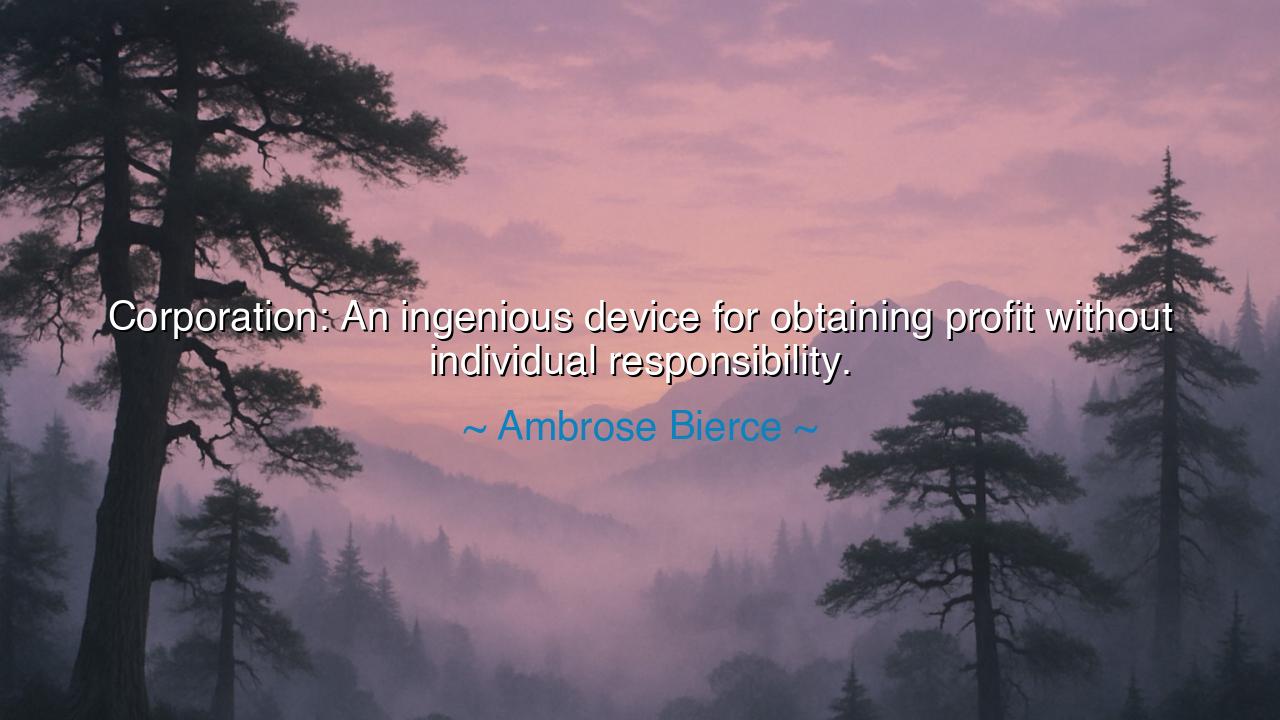
Corporation: An ingenious device for obtaining profit without individual responsibility.










Host: The night had settled like smoke over the city, its neon veins pulsing through the windows of a glass skyscraper. The rain hadn’t stopped since dusk, tracing long, trembling lines down the panes, distorting the skyline into liquid reflection.
Inside, the office was almost empty. The hum of the fluorescent lights, the soft whirr of the air conditioning, and the faint ticking of a wall clock were the only sounds left to prove the place was still alive.
Jack stood near the window, his tie loosened, jacket off, sleeves rolled up. The city lights flickered in his grey eyes like distant explosions. Jeeny sat across the room, barefoot on the edge of a desk, her heels abandoned beside a pile of reports. A single lamp illuminated her face, the rest swallowed by shadow.
On the table between them lay an open laptop, its screen glowing with the bold letters of a quote:
“Corporation: An ingenious device for obtaining profit without individual responsibility.” — Ambrose Bierce
Jack: (smirking) “Ambrose Bierce… the man knew how to stab with a sentence. He saw it before anyone else did—the machine we call a corporation. A perfect organism: self-preserving, profit-driven, and utterly soulless.”
Jeeny: “Soulless? Or just efficient? A corporation isn’t a monster, Jack. It’s people. It’s us. The problem isn’t the machine—it’s the hands that guide it.”
Host: Jack laughed, a low, weary sound. He poured himself a drink from a crystal decanter, the amber liquid swirling in the glass like fire.
Jack: “Hands that vanish the moment something goes wrong. Have you ever seen a CEO stand trial for the deaths his products caused? Or a board of directors confess greed as sin? No. They hide behind the entity. That’s the brilliance Bierce saw: collective gain, no personal guilt.”
Jeeny: (folding her arms) “You talk as if every corporation is a crime scene. What about hospitals, renewable energy companies, tech firms curing blindness, small startups changing lives? Are they soulless too?”
Jack: “They’re still built on the same legal fiction. Limited liability—the shield of modern sin. A corporation can poison a river, bankrupt a nation, destroy forests, and what happens? A press release. An apology. Stocks recover in a week. If a man did that, he’d rot in prison.”
Jeeny: “And yet without them, we’d still be lighting candles instead of cities. Corporations didn’t invent greed, Jack—they just gave it a uniform. They also gave humanity structure, scale, and invention.”
Host: The rain beat harder now, the sound like applause or accusation against the glass. Jack turned from the window and leaned against the desk, the light catching the edges of his face.
Jack: “Structure without conscience is tyranny. You ever read about the Bhopal disaster, 1984? Union Carbide—corporate negligence killed thousands in a single night. No one went to jail. Just compensation cheques and denial. Tell me again about structure.”
Jeeny: (her voice quieter, sadder) “Yes, and you could say the same about governments, armies, churches. All systems fail when people do. But we can’t exist without them. You can’t condemn the ship because a few captains steer it into rocks.”
Jack: “Except this ship sails on profit, not purpose. It doesn’t care where it’s heading as long as it moves faster. Look around, Jeeny—the lights outside? They’re powered by fossil fuel conglomerates destroying oceans. The phone on your desk? Mined from child labor in Congo. The chair you’re sitting on? Made in a factory that pays workers less than a meal a day. This—” (he gestures around) “—is the cathedral of denial.”
Jeeny: (a long pause) “And yet you still work here.”
Host: The words cut deeper than accusation. Jack’s fingers tightened on the edge of the desk, his jaw flexing.
Jack: “Because leaving doesn’t absolve me. It just hands my place to someone worse.”
Jeeny: “Then maybe staying gives you the power to change something.”
Host: The lights flickered, the building humming with distant machinery. A storm grumbled over the city, its thunder like a restless god.
Jeeny slid off the desk, walking closer, her bare feet soundless on the polished floor. Her voice softened.
Jeeny: “Bierce lived in a world where corporations were young, reckless, and untamed. But they’ve evolved. There are social enterprises now, impact investors, companies measuring success in more than dollars. Maybe the device he described isn’t doomed—it just needed a conscience upgrade.”
Jack: (bitterly) “A conscience doesn’t show up on a quarterly report.”
Jeeny: “Neither does guilt, but people still feel it. Don’t underestimate the human within the structure. Even the machine can grow empathy if the engineer does.”
Jack: “Empathy doesn’t scale, Jeeny. Shareholders don’t vote for kindness.”
Jeeny: “But consumers do. Remember Patagonia? They gave away their entire company to fight climate change. That’s corporate conscience. Maybe small, maybe rare—but real.”
Host: Jack set his drink down, the glass clinking softly. He stared at the quote again on the laptop screen.
Jack: “So what are we then? Cog or conscience? Maybe we’re all complicit in the same lie—that systems can be moral.”
Jeeny: (gently) “Maybe morality isn’t in the system. It’s in how we choose to stand inside it.”
Jack: “And what choice do you think that is?”
Jeeny: “The choice to be human where humanity seems optional.”
Host: For a moment, neither spoke. The rain slowed, becoming a fine mist against the glass. The city lights glowed softer now, refracted and forgiving.
Jack walked to the window again, his reflection merging with the skyline.
Jack: “Sometimes I think corporations are mirrors. They reflect us—our hunger, our fear, our ambition. We blame the reflection to avoid facing the face.”
Jeeny: “Exactly. The device isn’t evil, Jack. It’s ingenious, as Bierce said. It just amplifies what’s already in us. If we worship profit, it becomes a god of greed. If we value life, it can serve that too.”
Jack: (quietly) “You make it sound redeemable.”
Jeeny: “Maybe it is. Maybe the only way to fix the machine is to remember it was made by hands—not ghosts.”
Host: A flash of lightning illuminated the entire room, followed by the distant roll of thunder. The screen saver on the laptop faded, plunging the quote into darkness.
Jack exhaled, long and slow, then turned back to Jeeny.
Jack: “You ever think Bierce would laugh at this conversation? He’d probably say we’re just dressing up greed in pretty words.”
Jeeny: (smiling faintly) “Maybe. But maybe he’d also see that even the most cynical device can evolve. Even the machine can dream.”
Jack: (half-smiling) “A machine that dreams. Now that’s dangerous.”
Jeeny: “Maybe danger is the only thing that keeps us honest.”
Host: The clock struck midnight. Somewhere below, the streets glistened, reflections of headlights weaving through puddles like molten silver. The storm had passed, leaving only the hum of electric quiet.
Jack closed the laptop. The room dimmed, save for the faint glow of the city beyond the glass.
Jeeny reached for her heels, but didn’t put them on. She looked at Jack one last time.
Jeeny: “You can call it an ingenious device, Jack. But every device needs a hand. Maybe that’s where responsibility begins again.”
Host: Jack didn’t answer. He just watched the rain-slick streets, where small figures hurried under umbrellas, unaware of the debate unfolding in the glass tower above them.
He raised his glass once more, the light catching its amber reflection.
Jack: (softly, almost to himself) “Then here’s to hands that remember they’re still human.”
Jeeny: (smiles) “And to hearts that remember they’re not replaceable.”
Host: The storm’s echo faded into silence. The city breathed, alive again. Somewhere in the distance, a neon sign flickered, one word burning brightest: Responsibility.
And for that brief, trembling moment, even the machine seemed to listen.

AAdministratorAdministrator
Welcome, honored guests. Please leave a comment, we will respond soon