

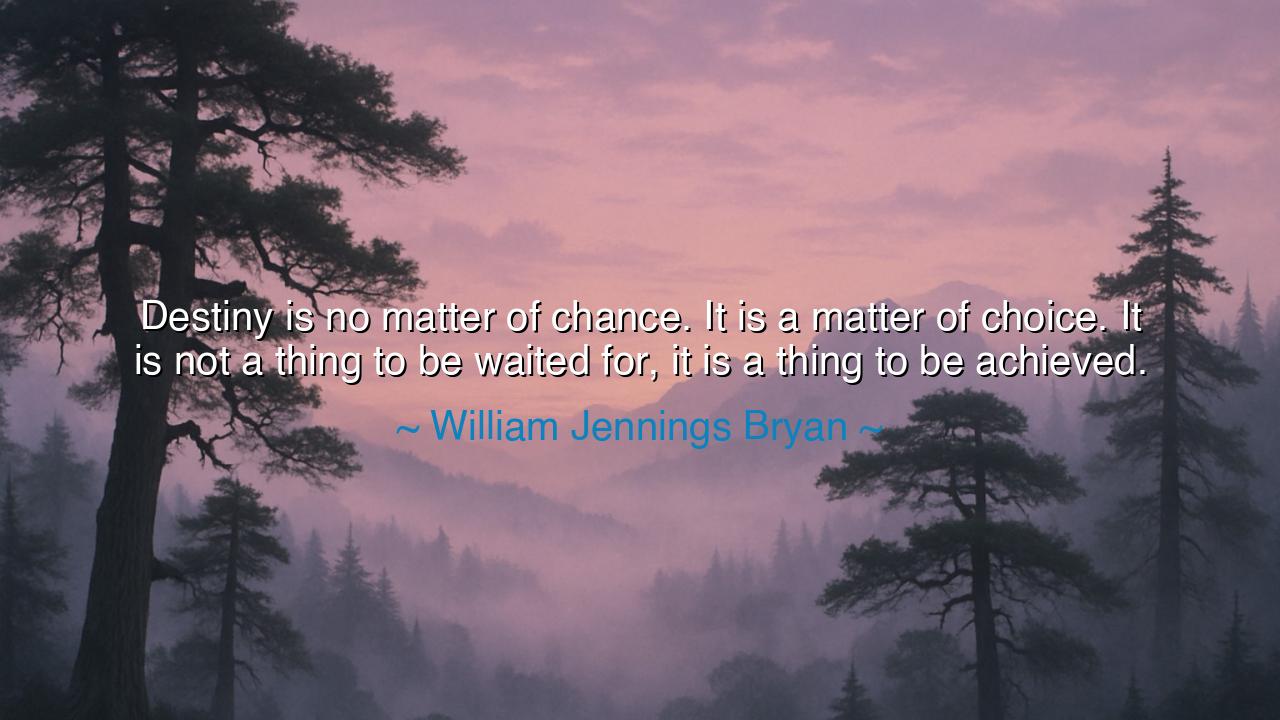
Destiny is no matter of chance. It is a matter of choice. It is
Destiny is no matter of chance. It is a matter of choice. It is not a thing to be waited for, it is a thing to be achieved.









Host: The sky was a canvas of molten gold and smoke, the sun sinking behind the city’s jagged skyline. The air trembled with heat; the streets were humming — alive with horns, voices, footsteps, and the restless pulse of people chasing something. At a street corner café, half-hidden behind grime-streaked windows, Jack and Jeeny sat opposite each other. Jack’s shirt sleeves were rolled up, his grey eyes cold and focused, as though calculating the weight of every word. Jeeny, her hair falling loose, stirred her coffee slowly, her gaze distant but alive, reflecting the flickering light of a neon sign that read — “LIVE YOUR FATE.”
Host: Between them lay a small notebook, the page open to a handwritten quote, the ink still wet:
“Destiny is no matter of chance. It is a matter of choice. It is not a thing to be waited for, it is a thing to be achieved.”
— William Jennings Bryan.
Jack: (leaning back) “Bryan was wrong. Destiny isn’t a choice — it’s circumstance wrapped in arrogance. You don’t choose where you’re born, who you love, when you fall, or what the world takes from you. You just survive it.”
Jeeny: (softly, without looking up) “You don’t survive destiny, Jack. You build it. That’s the difference. Circumstance is what happens to you — destiny is what you do with it.”
Host: A truck rumbled past, shaking the windowpane, making the coffee cups tremble. The sound seemed to echo their argument before it began — a low warning of collision.
Jack: “You sound like one of those motivational speakers plastered across LinkedIn. ‘Believe and you can achieve.’ Come on. Some people are born into power, others into chaos. You think a kid in a war zone or a single mother breaking her back at three jobs gets to ‘choose’ destiny?”
Jeeny: “I think even they do. Not the circumstances — but the response. Viktor Frankl wrote from a concentration camp that the last human freedom is to choose one’s attitude in any circumstance. If he could say that, what excuse do we have?”
Host: The words hit like raindrops on glass — soft, but sharp enough to echo. Jack’s hand twitched. He picked up his glass, took a long swig, and stared at her, his expression unreadable.
Jack: “Frankl was one in a billion. Most people break before they find meaning. You call it choice — I call it luck that he didn’t. Maybe destiny’s just a story we tell ourselves to feel in control.”
Jeeny: “Or maybe that story is control. Maybe believing we have a choice is what makes the difference between living and merely breathing.”
Host: Jeeny’s voice trembled slightly — not from weakness, but from the weight of conviction. The neon light outside flickered, painting her face in alternating bands of red and blue, like two halves of one truth.
Jack: “Then explain this — if destiny is chosen, why do the kindest people die young and the cruelest live long? Why do talent and opportunity never meet? If destiny were about choice, justice would be natural.”
Jeeny: “Because destiny isn’t justice, Jack. It’s purpose. The universe doesn’t owe you fairness — it gives you freedom. You can’t choose the wind, but you can adjust your sails.”
Host: The hum of a passing train filled the silence. For a moment, it seemed as if the entire city was holding its breath, suspended between noise and meaning. Jack’s jaw tightened, but his eyes softened — that flicker of vulnerability that he tried, always, to hide.
Jack: “You make it sound simple. But choice is a luxury, Jeeny. The system’s built to keep some people trapped — economically, socially, mentally. How can you ‘choose’ when the cage was built before you were born?”
Jeeny: “Even in a cage, the bird still sings. Maybe it can’t fly yet — but its song reminds the world it’s alive. That’s the kind of choice I’m talking about. Defiance through creation.”
Jack: (scoffs, but quieter) “You think poetry changes bars into wings?”
Jeeny: “It changes people. And people change everything.”
Host: The air shifted, carrying in the scent of rain and asphalt. The first drops fell — slow, hesitant — tapping against the window, like the heartbeat of something waking. Jack looked up, as if searching for something in that rain — a way to argue, or a way to believe.
Jack: “You always make it sound like we can rewrite fate by wanting it enough. But I’ve seen people fight like hell — and lose everything anyway. Sometimes the world doesn’t care how brave you are.”
Jeeny: (whispering) “That’s the tragedy of choice — not that it guarantees success, but that it gives meaning to the struggle. That’s why Bryan said it must be achieved, not waited for.”
Host: Jeeny leaned forward, her eyes bright, her voice low but fierce, like someone delivering a truth she’d carried for years. The rain intensified, rattling against the glass. Jack’s reflection shimmered — fragmented, divided.
Jeeny: “Do you know what waiting for destiny looks like? Regret. Entire lives spent saying ‘someday.’ Choice is terrifying — but it’s the only thing that saves us from becoming spectators in our own stories.”
Jack: (smiling grimly) “And what if you choose wrong?”
Jeeny: “Then you learn. And you keep choosing. Because even failure’s better than the illusion that you were powerless.”
Host: The light flickered again, and for a heartbeat, the room seemed frozen — two souls in a stalemate, their words circling like predators and prey. But something had shifted. The anger in Jack’s tone had turned into something quieter, heavier — resignation mingled with recognition.
Jack: “You ever think choice is just another name for self-punishment? We tell ourselves we had control, so we can blame ourselves when it all goes wrong.”
Jeeny: “Yes. And that’s the risk of freedom — that you’ll carry both your victories and your failures. But wouldn’t you rather hold your own fate than hand it to someone else?”
Host: The rain slowed, the sound of it melting into a soft rhythm. Jack exhaled, the first real breath he’d taken in minutes. The neon sign outside dimmed, its last pulse flickering over the table, where the notebook still lay — open, waiting, alive.
Jack: “You really think destiny’s something you can build? Like a bridge?”
Jeeny: “No. More like a path. You don’t see it all at once — you carve it with every step. Every choice is the chisel.”
Host: The rain clouds parted slowly, revealing a faint glow of moonlight over the city’s shoulders. The streets shimmered, the noise softened, as if the whole world had leaned in to listen.
Jack: (after a long pause) “You know... I used to think my life was just what happened to me. Work, loss, chance. But maybe it’s what I did — or didn’t do — with it that really mattered.”
Jeeny: “That’s destiny, Jack. Not what you inherit — but what you decide to become.”
Host: The silence that followed wasn’t empty. It was full — like the pause before a song begins again. Jack closed the notebook, his fingers tracing the inked words, the edges soft from touch. He looked up, and for the first time that night, he smiled — not out of amusement, but understanding.
Jack: “Maybe Bryan was right after all. Destiny isn’t waiting for the storm to pass — it’s building something in the rain.”
Jeeny: “Exactly. And sometimes, it’s realizing the storm was the test that proved you could.”
Host: The rain stopped. Streetlights flickered to life, casting halos over puddles that mirrored the city’s glow. Jack stood, his shadow merging with Jeeny’s, as they stepped into the cool night, leaving behind the echo of their debate and the smell of coffee and rain-soaked dreams.
Host: The neon sign above the café flickered one last time — LIVE YOUR FATE — before going dark, its message sinking into the night like an echo of choice. And somewhere between the fading thunder and the whisper of footsteps, the truth lingered:
Destiny isn’t something you find. It’s something you dare to make.

AAdministratorAdministrator
Welcome, honored guests. Please leave a comment, we will respond soon