

I learned a long time ago that some people would rather die than
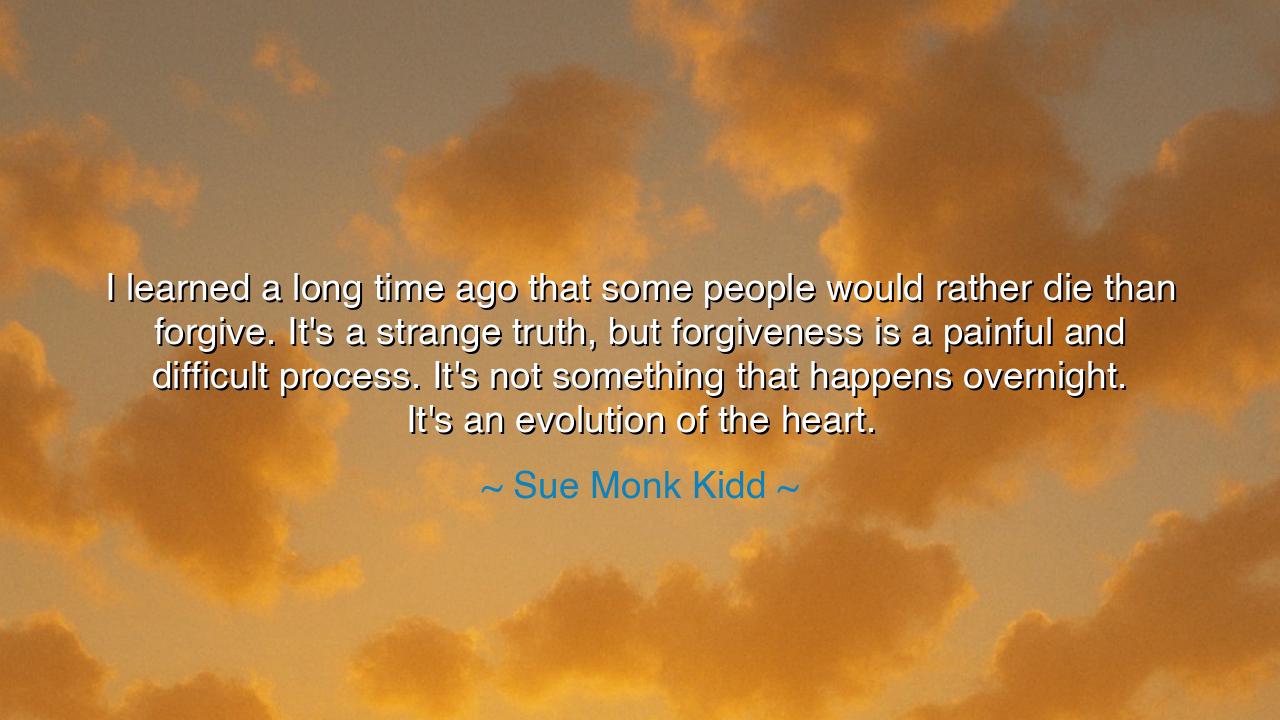
I learned a long time ago that some people would rather die than forgive. It's a strange truth, but forgiveness is a painful and difficult process. It's not something that happens overnight. It's an evolution of the heart.









Host: The rain had just stopped, leaving the streets glistening beneath the amber glow of the streetlights. The city seemed to breathe, slowly and wearily, as if it too had cried its share of tears. Through the fogged window of a small café, Jack and Jeeny sat opposite each other — two silhouettes framed by the reflection of passing cars and the soft hum of late-night jazz.
Jack stared into his coffee, its steam curling like a memory, while Jeeny traced the edge of her cup, her fingers trembling slightly. There was tension, but also a kind of tired intimacy — the kind that comes when two people have argued too many times but still care enough to stay.
Jeeny: “I read something tonight. Sue Monk Kidd wrote, ‘I learned a long time ago that some people would rather die than forgive.’ It’s such a strange, painful truth, isn’t it? That forgiveness can be harder than death itself.”
Jack: (without looking up) “Or maybe it’s not strange at all. Maybe it’s just human nature. You hurt someone deeply enough, and the wound becomes their identity. They don’t know who they are without it.”
Jeeny: “But that’s tragic, Jack. To live inside your own wound — that’s not living. That’s rotting.”
Jack: “And yet people do it every day. Look at wars, families, nations. They’d rather burn everything than say, ‘I forgive you.’ Because forgiveness means weakness, and weakness means defeat.”
Host: The lights flickered, a passing car’s headlights spilling across Jack’s face, revealing the shadows under his eyes. He looked tired, the kind of tired that comes not from lack of sleep, but from carrying memories too long. Jeeny’s eyes, meanwhile, were bright, though wet — she looked like someone who still believed in something fragile and was trying not to lose it.
Jeeny: “No, forgiveness isn’t defeat. It’s an evolution — of the heart, of the soul. It’s what makes us human.”
Jack: “An evolution? You make it sound like it’s some kind of noble transformation. But tell me, Jeeny, what about the woman whose husband killed her child? Or the man whose brother betrayed him and ruined his life? Are you saying they’re supposed to forgive?”
Jeeny: “Not supposed to. But maybe able to, eventually. Like that South African mother who forgave the men who murdered her son during apartheid — she looked them in the eye and said, ‘I forgive you.’ Do you know what kind of strength that takes?”
Jack: “Or what kind of delusion.”
Jeeny: “You don’t mean that.”
Jack: “I do. Sometimes people call it forgiveness when it’s really just surrender — giving up the fight because they can’t bear to keep fighting. But that’s not moral growth. That’s exhaustion dressed as virtue.”
Host: A train horn echoed in the distance, long and melancholic. The clock above the counter ticked, each second an accusation against the silence between them. Outside, a drunk man laughed, the sound dissolving into the night air.
Jeeny: “You sound like you’ve never forgiven anyone.”
Jack: (quietly) “Maybe I haven’t.”
Jeeny: “Then maybe that’s why you don’t understand it.”
Jack: “Understand it? Oh, I understand it perfectly. Forgiveness is just a trick people tell themselves to feel better. It’s emotional anesthesia. You numb the pain by pretending it’s gone.”
Jeeny: “That’s not true. Forgiveness doesn’t erase pain — it just keeps it from turning into hatred. It’s not forgetting, Jack. It’s choosing not to let the darkness define you.”
Jack: “And what if that darkness is all that’s left?”
Host: The café door opened, letting in a gust of cold air and the faint smell of rain-soaked asphalt. For a moment, the sound of the city filled the space — distant sirens, footsteps, the low murmur of people moving on with their lives. Then it was gone, and only the two of them remained in their small universe of words and regrets.
Jeeny: “You know, my mother used to say, ‘Holding onto anger is like drinking poison and expecting the other person to die.’”
Jack: “And yet people keep drinking.”
Jeeny: “Because they don’t know how to stop.”
Jack: “Or they don’t want to. Some people need their bitterness. It gives them meaning. Like Captain Ahab — chasing the whale, knowing it’ll kill him, but not knowing what he’d do if he stopped. Hatred gives structure to the chaos.”
Jeeny: “But it also consumes you. Look at Ahab — he dies with his rage intact but his soul lost. Forgiveness, Jack, is the opposite of that. It’s not a gift you give the other person; it’s the freedom you give yourself.”
Jack: (leans back, sighing) “You talk like forgiveness is a miracle.”
Jeeny: “It is.”
Jack: “Then I guess I don’t believe in miracles.”
Host: Jack’s voice dropped lower, almost a whisper now. His hands, once steady, tightened around the coffee cup, as if it were the only thing anchoring him. Jeeny watched him — not with pity, but with the soft ache of someone who sees the walls another builds around their own heart.
Jeeny: “Who hurt you so badly, Jack, that you’d rather stop believing in goodness altogether?”
Jack: (after a long pause) “My father. He walked out when I was twelve. Left my mother drowning in debt, left me believing I wasn’t worth staying for. She forgave him when he came back ten years later. I couldn’t. Still can’t.”
Jeeny: (softly) “Did forgiving him make her weak?”
Jack: “No. But it didn’t make her happy either.”
Jeeny: “Maybe it made her peaceful. There’s a difference.”
Jack: “Peace is just emptiness without pain.”
Jeeny: “No. Peace is the moment when you stop needing pain to prove you’re alive.”
Host: The music in the background shifted — an old piano melody, slow and melancholic, its notes falling like rain on glass. Outside, the wind had calmed, and a faint mist drifted through the streetlights. The world felt tender, almost forgiving.
Jack: “You make it sound so easy.”
Jeeny: “It’s not easy. Sue Monk Kidd was right — it’s an evolution. The heart doesn’t change overnight. It’s a long, messy process, filled with doubt, anger, and tears. But every act of forgiveness, no matter how small, is a step toward healing.”
Jack: “And what if you never reach the end of that road?”
Jeeny: “Then you keep walking anyway. Because the journey itself transforms you.”
Host: Jeeny’s voice trembled slightly, but it carried a kind of courage that came not from certainty, but from faith — faith that even in the wreckage, something beautiful could still bloom. Jack looked at her then, really looked, and for the first time, his eyes softened. The grey in them caught a faint glint of warmth, like the first light after a long storm.
Jack: “Maybe forgiveness isn’t weakness. Maybe it’s just... too human for me right now.”
Jeeny: “Then start there. Admit it’s hard. That’s the first act of forgiveness — forgiving yourself for not being ready.”
Jack: (half-smiling) “You really believe hearts evolve, don’t you?”
Jeeny: “They have to. Otherwise, we’d never survive ourselves.”
Host: The café lights dimmed as the waitress cleaned up, signaling the night’s end. Jack and Jeeny sat in silence, their words still hovering in the air like embers after a fire. There was no clear resolution, no tidy closure — just a quiet understanding, raw but real.
Outside, the rain began again — not hard, but gentle, almost like an apology from the sky.
Host: The camera pans out through the window, where the reflection of two faces remains — one haunted, one hopeful. And between them, the faintest light of something beginning to heal.
Host: In the end, perhaps forgiveness isn’t a destination at all. It’s simply the courage to take the next breath — and call it love.

AAdministratorAdministrator
Welcome, honored guests. Please leave a comment, we will respond soon