

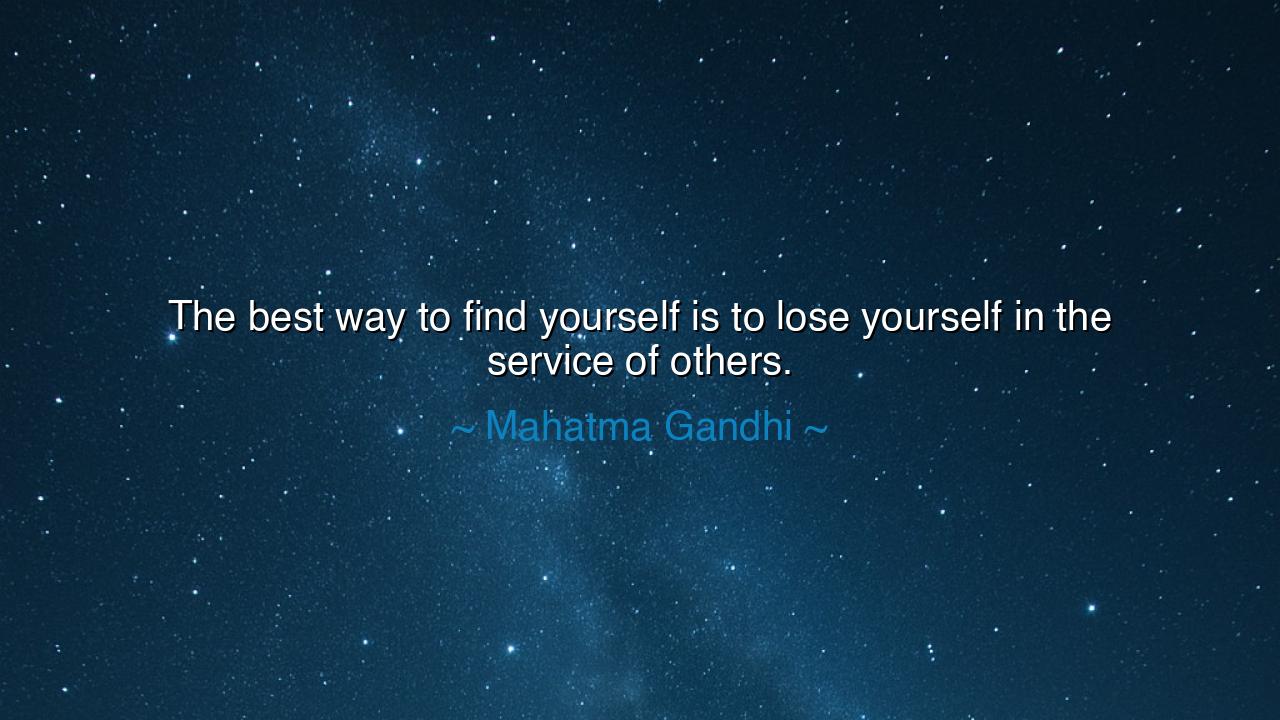
The best way to find yourself is to lose yourself in the service









Host: The morning light broke through the cracked factory windows, pouring onto the dust-swirled air like liquid gold. The machines were still, the silence uncanny — the kind that follows years of noise. It was Sunday. The workers were gone, the floor half-lit, half-shadow.
Jack sat on an overturned crate, his hands stained with oil, a faded blue jumpsuit rolled to the elbows. His grey eyes held the exhaustion of someone who’s seen too much of the world’s machinery — both mechanical and human. Across from him, Jeeny stood near a broken window, her dark hair caught by the light breeze. She wore no makeup, no jewelry, just a white blouse, simple and unadorned, her eyes carrying that kind of quiet conviction that makes silence meaningful.
Host: A distant train horn echoed through the industrial valley — long, sorrowful, almost sacred.
Jeeny: “Gandhi once said, ‘The best way to find yourself is to lose yourself in the service of others.’”
Host: Her voice was soft, but the words cut through the hollow air like sunlight through dust.
Jack: “That’s a noble line. But I think Gandhi never worked twelve-hour shifts in a plant that didn’t even give its workers a day off.”
Jeeny: “He walked barefoot across a continent, Jack. He served people who would never remember his name. You think that’s less exhausting?”
Jack: “At least he chose it. Most people don’t. You can’t talk about losing yourself in service when the world doesn’t give you a choice but to serve.”
Host: The sound of metal creaking filled the silence — the roof settling, the past shifting. Jeeny turned, leaning against the window frame, her silhouette outlined against the light.
Jeeny: “You’re not talking about service, Jack. You’re talking about survival.”
Jack: “Same thing.”
Jeeny: “No. Survival is what you do to stay alive. Service is what you do to make living worth it.”
Host: He looked up, a faint smirk ghosting across his lips, though his eyes didn’t join it.
Jack: “That sounds like something you’d read on a charity billboard. You think anyone actually finds themselves by giving everything away?”
Jeeny: “Yes. I’ve seen it.”
Jack: “Where?”
Jeeny: “In a hospital. Two months ago. A retired nurse — eighty years old — still volunteering in the children’s ward. She said she doesn’t know who she is anymore when she’s home. But when she’s there, cleaning a wound, holding a frightened child’s hand — she said she remembers herself again. You think that’s nothing?”
Host: Jack’s jaw tightened. His hands fidgeted with a rusted bolt, rolling it back and forth like a coin of memory.
Jack: “That’s different. That’s her calling. But for the rest of us, losing yourself in others just means becoming invisible. It’s how people get used — and forgotten.”
Jeeny: “And what’s the alternative? Living for yourself, protecting your own walls until there’s nothing inside worth protecting?”
Host: The light shifted, a beam cutting across Jeeny’s face, glinting off the small tear she didn’t bother to hide.
Jack: “You make it sound easy — giving. But it’s not noble if it costs you your identity.”
Jeeny: “Sometimes that’s the only way to find it. Maybe the problem isn’t losing ourselves — maybe it’s that we only ever knew the selfish parts to begin with.”
Host: The factory clock ticked faintly. Somewhere, a loose chain clinked against a pipe, rhythmic, metallic — like the pulse of something long dormant but not dead.
Jack: “You know, my father used to talk like that. Said people are measured by what they give. He spent his life in this same factory, fixing other people’s mistakes, mentoring kids who barely knew his name. When he died, they put his photo on the wall for a week — then replaced it with a safety sign.”
Jeeny: “So you’re angry at service because it didn’t save him?”
Jack: “I’m angry because it erased him. He lost himself in the service of others — and the world kept spinning like he was nothing.”
Jeeny: “No, Jack. The world forgot him. But the people he helped — they didn’t. There’s a difference. You just can’t measure that kind of legacy in plaques.”
Host: The light dimmed as a cloud passed. For a moment, everything inside the factory turned to shadow and memory. Jack’s voice softened, as though something deep in him cracked open.
Jack: “He used to fix bikes for the neighborhood kids. Free of charge. I thought it was stupid — wasting time, wasting effort. But every time a kid rode off smiling, he’d say, ‘That’s payment enough.’ I never understood him.”
Jeeny: “Maybe he understood Gandhi before you did.”
Jack: “You really think losing yourself like that — just giving and giving — leads to finding who you are?”
Jeeny: “Yes. Because what you give away reveals what’s real in you. It’s the only mirror that doesn’t lie.”
Host: She walked toward him, the floorboards creaking, her voice low and steady.
Jeeny: “Do you remember that flood last year? The one that hit the lower district?”
Jack: “Yeah.”
Jeeny: “You went there. You helped dig people out. You didn’t eat, didn’t sleep. You carried children across the mud. No one asked you to. No one paid you. You did it because you couldn’t stand doing nothing. Tell me, Jack — in that moment, weren’t you more yourself than you’ve ever been?”
Host: His eyes flickered, like a match almost catching flame.
Jack: “Maybe. But it wasn’t about me. It was about them.”
Jeeny: “Exactly.”
Host: The silence stretched. Outside, the sun broke free from the clouds, flooding the factory with a sudden radiance, spilling over the dust like a revelation.
Jack: “You know what scares me most? When I’m alone, I don’t know who I am. But when I’m helping someone... it’s like something else takes over — something clearer, simpler.”
Jeeny: “That’s the part Gandhi was talking about. The self that exists only when it forgets to exist.”
Jack: “That’s a paradox.”
Jeeny: “So is life.”
Host: Jeeny smiled faintly — not triumphantly, but gently, like the kind of smile that forgives the world for being broken.
Jeeny: “You keep thinking service is sacrifice. But it’s not. It’s connection. It’s the moment your heartbeat syncs with someone else’s pain — and for once, you’re not a stranger to this world.”
Jack: “And what if you lose too much of yourself in that connection?”
Jeeny: “Then you find out what was never truly yours to begin with.”
Host: Jack stood, slowly, stretching the stiffness from his body. He looked at the light streaming through the window — the same window his father used to stand beside, years ago. The air smelled of rust and rain and something faintly hopeful.
Jack: “Maybe I’ve been wrong about him. Maybe losing himself wasn’t failure.”
Jeeny: “Maybe it was freedom.”
Host: The sound of the distant train returned, softer this time, like the heartbeat of the horizon.
Jack: “You think the world really changes when one person serves another?”
Jeeny: “Maybe not the world. But a world. Someone’s world. And that’s enough.”
Host: Jack nodded, his eyes wet, his mouth trembling into something that almost resembled peace.
Jack: “Then maybe I’ll start there.”
Jeeny: “Where?”
Jack: “With someone else’s world.”
Host: She smiled. The sunlight grew brighter, painting their faces in gold. Dust floated like tiny stars between them. For a moment, the factory — old, forgotten, broken — became a cathedral of quiet rebirth.
And in that fragile, glowing stillness, Gandhi’s words lived again — not as scripture, not as ideology, but as truth made flesh:
That to find yourself, you must first disappear into the service of others.
Because sometimes, losing yourself is not a vanishing —
It’s a becoming.

AAdministratorAdministrator
Welcome, honored guests. Please leave a comment, we will respond soon