

They say in the grave there is peace, and peace and the grave
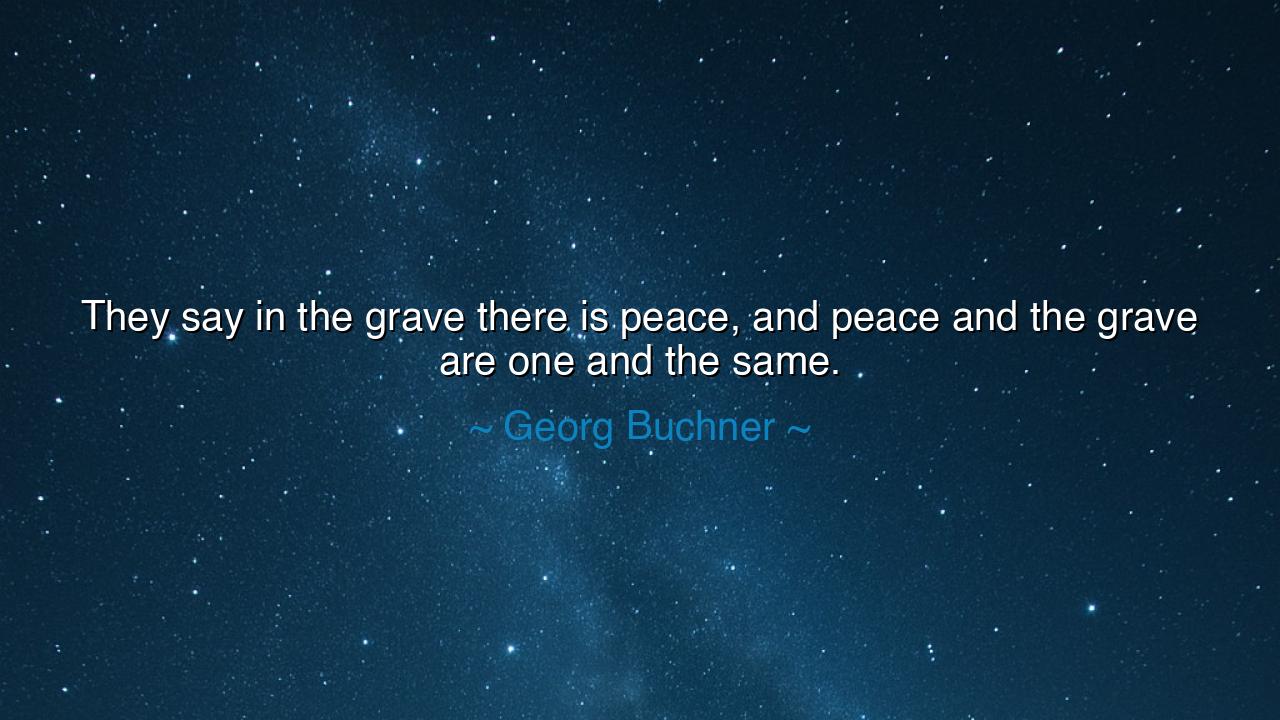









Hear the haunting words of Georg Büchner, the German playwright whose brief life burned with restless fire: “They say in the grave there is peace, and peace and the grave are one and the same.” In these words we hear not the triumph of joy, but the lament of a spirit that saw too clearly the suffering of men. Büchner, a voice of revolution and despair in the 19th century, gives us here a paradox: that what men most long for—peace—is found only in the stillness of death. To him, the turmoil of life, with its injustice, its poverty, its endless strife, offered no lasting comfort. Only the silence of the grave was free of pain, and thus peace and death became one.
The meaning is grim, yet profound. It speaks of a world where the burdens of existence weigh heavily, where men toil and hope, only to be met with disappointment and sorrow. In such a world, the grave is no longer seen as an enemy, but as the final sanctuary where all striving ceases. To call the grave and peace one and the same is to acknowledge the frailty of human joy, and the certainty that the storms of life end only in stillness. Büchner himself, who died young of illness and disillusionment, spoke as one who had tasted the bitterness of a world unhealed.
The origin of these words is found in his work Woyzeck, a fragmentary play that portrays the crushing weight of poverty and despair upon a common soldier. In its lines, Büchner gave voice to the voiceless, revealing the cruelty of a society that devours its weakest. The cry that peace and the grave are one is the cry of a soul overwhelmed, a man who sees no deliverance in life, only release in death. It is the echo of an age of upheaval, when Europe trembled with revolutions but still failed to heal the suffering of its poor.
History bears witness to this sentiment in the lives of many. Consider the soldiers of the First World War, trapped in trenches of mud and fire, where each day brought horror beyond imagination. For them, the word peace often meant not the end of battle, but the end of life itself. Many wrote in their letters that only in the grave would they find true rest. Their voices, like Büchner’s, reveal the dark side of human longing: that when life refuses to give solace, death becomes the only comfort.
Yet, let us not take Büchner’s words as despair alone. For though they arise from suffering, they also call us to reflection: if men equate peace with the grave, then surely it is our duty to bring peace into life itself. Let not the weary wait for death to be free of sorrow. Let us build a world where justice reigns, where the oppressed are lifted, where mercy dwells among men. In this way, the stillness of the grave need not be the first taste of true rest—it may be foreshadowed in the harmony of a righteous life.
The lesson for us is clear: do not ignore the cries of those who despair, for their lament is a mirror of society’s failure. If the poor, the weary, the broken-hearted say that only the grave is peace, then we must labor all the more to sow peace in their days. Speak kindly, act justly, defend the vulnerable. For every act of compassion is a rebellion against Büchner’s dark truth, and a step toward a world where peace belongs to the living as well as the dead.
So remember, O listener: though Büchner’s words seem heavy with shadow, they hold a hidden light. The grave may be stillness, but true peace is more than stillness—it is justice, mercy, and love made flesh in the present. Let us then not wait for death to grant what life withholds, but become bringers of peace while breath is still in us. For in doing so, we break the chain of despair, and show that the living, too, may taste the peace that heals the soul before it reaches the grave.

TCNguyen Thi Chuyen
Buchner’s words evoke a sense of finality and inevitability, which feels almost too absolute. If peace is the same as the grave, does this imply that peace in life is unattainable? It suggests that peace is something we only experience after death, which seems to negate the idea that we can live peacefully in the present. Is there a way to challenge this idea, or is peace something that we can only hope for once we’re gone?
NHNguyen Huy
There’s a deep melancholy in Buchner’s statement about peace in the grave. It makes me reflect on how we view death: as a release, an escape, or an inevitability. But I wonder, is peace in life always temporary and fragile? Can we ever achieve lasting peace in the chaos of daily existence? Or is it just a fleeting moment of respite before we return to our struggles? This quote raises more questions about life’s impermanence.
MNHua Thi Minh Nguyet
Georg Buchner’s quote speaks to the idea of peace being final and absolute in death, but I wonder if peace in life can ever reach that level of finality. It makes me think about how fleeting moments of peace are during our lives, especially when they’re often interrupted by stresses and struggles. What does peace really mean in the context of life versus death? Is it something we can truly grasp, or just an ideal we chase?
UGUser Google
I can’t help but feel a bit conflicted by this quote. While I understand the notion of peace being found in death as an escape from suffering, it also makes me wonder about the nature of peace during life. Is peace only an absence of conflict, or can it be something more? I’m not sure I agree that peace and the grave are one in the same, as I believe peace can be found in life, too, if we actively seek it.
GDGold D.dragon
Buchner’s words bring a certain darkness to the concept of peace. While peace is often associated with tranquility and resolution, this quote seems to suggest that peace in life is elusive—only to be found in death. Does this imply that life is inherently chaotic and we are only freed from that chaos in the grave? I’m curious about the emotional weight this statement carries and how it aligns with various philosophies of life and death.