

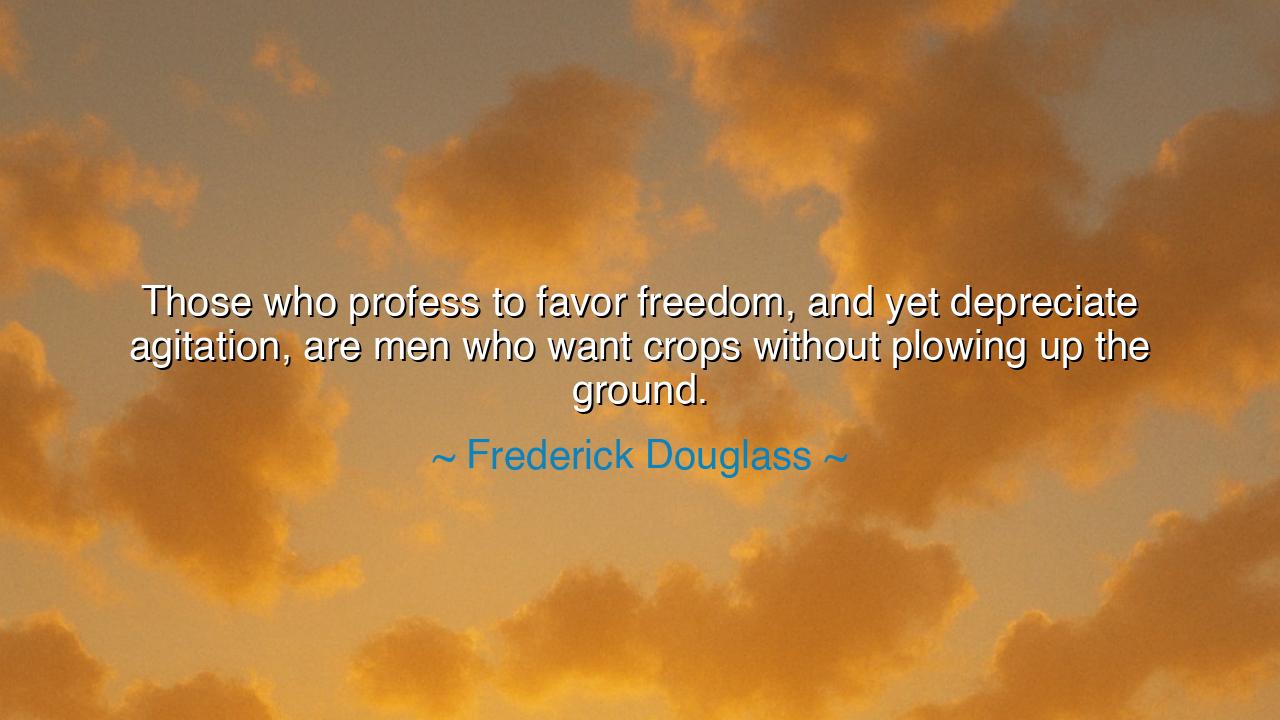
Those who profess to favor freedom, and yet depreciate agitation
Those who profess to favor freedom, and yet depreciate agitation, are men who want crops without plowing up the ground.










Host: The evening air was thick with heat and tension. The town hall smelled of dust, sweat, and wood polish, the kind of place where democracy was supposed to feel alive but often just felt tired. The ceiling fans creaked, blades turning slow, stirring nothing but the illusion of relief.
Outside, posters peeled on the lampposts — slogans half-faded, promises half-kept. Inside, Jack and Jeeny stood near the back of the hall after a long and bitter debate. The last of the crowd had filed out, leaving only the ghost of raised voices and the echo of unfinished sentences.
Host: The argument was over, but the air still trembled with the weight of words that had refused to land.
Jeeny: [leaning against the wall] “They want change, Jack. They just don’t want the noise that comes with it.”
Jack: [dryly] “Then they don’t want change. They want decoration.”
Jeeny: “You think they mean well?”
Jack: “I think meaning well is the most convenient form of cowardice.”
Jeeny: “That’s harsh.”
Jack: “So is complacency. Frederick Douglass said it better — ‘Those who profess to favor freedom, and yet depreciate agitation, are men who want crops without plowing up the ground.’”
Jeeny: “Yeah. They want the harvest without the calluses.”
Jack: “They want liberty without conflict. Justice without confrontation. Peace without the noise that births it.”
Host: The last of the fluorescent lights buzzed, flickering overhead like an indecisive conscience.
Jeeny: “You think agitation’s really necessary? Can’t there be quiet revolutions — progress without protest?”
Jack: [shaking his head] “No one wakes up from silence. The soil doesn’t yield unless you cut it open first.”
Jeeny: “But the world’s already so divided. Maybe people are just… tired of fighting.”
Jack: “Tired, yes. But fatigue isn’t peace — it’s surrender with better PR.”
Jeeny: “You sound like Douglass himself.”
Jack: “I wish. He understood something we keep forgetting: comfort is the enemy of freedom.”
Host: The echo of boots in the hallway grew faint as the janitor passed by, the sound fading like the conscience of the powerful.
Jeeny: “You know, there’s something tragic about it — everyone wants to be seen as virtuous, but no one wants to be uncomfortable doing it.”
Jack: “Exactly. Freedom’s not a mood board, it’s manual labor. You get dirt under your nails or you get nothing at all.”
Jeeny: “So agitation is virtue?”
Jack: “Agitation is truth with a pulse. Every inch of moral progress has come from someone’s refusal to sit still.”
Jeeny: “And yet, they call agitators troublemakers.”
Jack: “Of course they do. Because comfort always demonizes disruption.”
Host: The lights dimmed slightly, as if even electricity was growing weary of compromise.
Jeeny: “You think Douglass would recognize us now — this generation?”
Jack: “He’d recognize the patterns. The same cycle — oppression, outrage, fatigue, forgetfulness.”
Jeeny: “You make it sound hopeless.”
Jack: “Not hopeless. Predictable. And predictability’s the enemy of progress.”
Jeeny: “So we need to disturb the peace.”
Jack: “No. We need to redefine peace. Peace isn’t the absence of noise — it’s the presence of justice. Until that exists, agitation isn’t disruption; it’s repair.”
Jeeny: [quietly] “That’s beautiful.”
Jack: “It’s true.”
Host: A gust of wind blew through the open window, scattering a few papers across the floor — a fitting image for the necessity of disturbance.
Jeeny: “I’ve always hated conflict. But maybe I’ve been confusing peace with quiet.”
Jack: “Most people do. They think silence means agreement, when it really just means permission.”
Jeeny: “Permission for what?”
Jack: “For injustice to keep breathing.”
Jeeny: “You really believe agitation is love in disguise, don’t you?”
Jack: “The highest kind. You don’t fight for what you hate — you fight hardest for what you refuse to lose.”
Jeeny: “That’s… faith.”
Jack: “That’s the anatomy of change.”
Host: The rain started outside, steady and rhythmic, the sound like the heartbeat of something being born.
Jeeny: “You know, Douglass wasn’t just talking about politics. He was talking about the human soul. Growth hurts. You can’t evolve without tearing something first.”
Jack: “Exactly. Every awakening starts as agitation — neurons firing, conscience igniting. Even the brain rebels against stagnation.”
Jeeny: “So agitation’s not chaos — it’s the prelude to order.”
Jack: “Right. Like plowing the field before planting. The earth screams first — then it feeds you.”
Jeeny: “I love that. The scream before the bloom.”
Jack: “That’s history in one sentence.”
Host: A flash of lightning illuminated the hall — brief, fierce, honest — before disappearing into the storm’s silence.
Jeeny: “You think people are afraid of agitation because it exposes them?”
Jack: “Absolutely. It forces them to pick a side. Comfort dies when clarity arrives.”
Jeeny: “Then maybe we need more discomfort.”
Jack: “We always have. But we keep trading conscience for convenience.”
Jeeny: “And yet, every revolution starts with a whisper.”
Jack: “And ends with a roar.”
Jeeny: “And then the next generation forgets what the roar meant.”
Jack: “Until someone new learns how to shout.”
Host: The rain hit harder, beating against the windows, drowning the last trace of the city’s chatter — the sound of cleansing, not destruction.
Jeeny: [softly] “So what are we supposed to do? Agitate until the world hates us?”
Jack: “Agitate until the world wakes up. Hate is temporary. Awareness lasts.”
Jeeny: “You think people can still hear us through all the noise?”
Jack: “If the truth is loud enough, yes. And if it isn’t — then we make it louder.”
Jeeny: “So we plow.”
Jack: “We plow.”
Host: He looked out the window — the streetlights gleamed on the wet pavement, reflecting the world as it always was: imperfect, raw, but ready for growth.
Because as Frederick Douglass said,
“Those who profess to favor freedom, and yet depreciate agitation, are men who want crops without plowing up the ground.”
And in that silent, rain-washed hall,
Jack and Jeeny understood that progress is not born of politeness —
it is born of pressure, persistence, and the courage to till the soil of complacency.
Host: The rain slowed. The thunder softened.
And as they stepped outside into the wet night,
the world smelled of earth — freshly turned,
ready again for change.

AAdministratorAdministrator
Welcome, honored guests. Please leave a comment, we will respond soon