

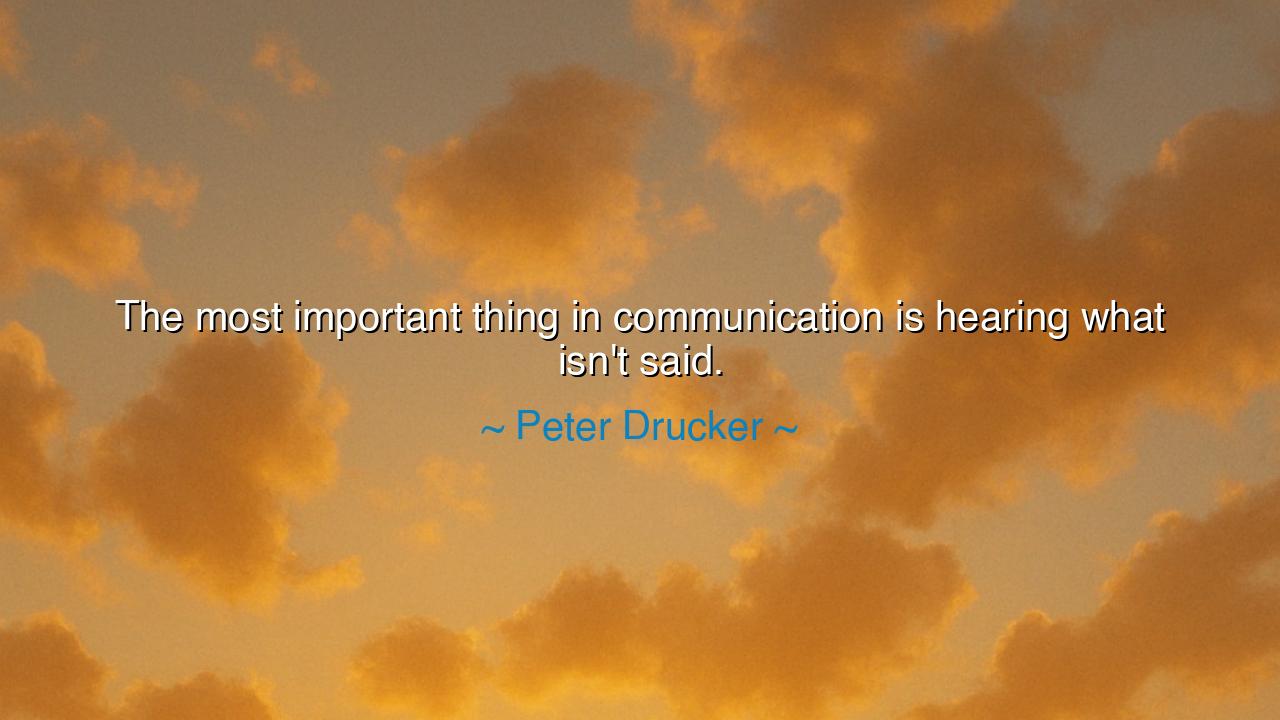
The most important thing in communication is hearing what isn't









Host: The office was empty, long after the day had finished doing its damage. The last of the city’s light bled through the floor-to-ceiling windows, turning the glass walls into mirrors that reflected the mess of coffee cups, open notebooks, and arguments that had gone unsaid. The hum of fluorescent lights was the only sound left — the artificial heartbeat of corporate loneliness.
Jack sat at the conference table, his tie loose, his expression unreadable. A single file folder lay open before him, pages scrawled with notes that had stopped meaning something hours ago. Across from him, Jeeny stood by the window, her reflection ghosting over the skyline. She was silent, but her silence was speaking louder than anything either of them had said all day.
Jeeny: (quietly) “Peter Drucker once said — ‘The most important thing in communication is hearing what isn’t said.’”
Jack: (without looking up) “Then we’ve been shouting all night.”
Jeeny: “No. We’ve been whispering with our eyes closed.”
Jack: “Same thing, isn’t it? No one’s listening.”
Jeeny: “That’s the point. Listening isn’t about waiting for words — it’s about noticing the tremors beneath them.”
Host: The rain began outside, a soft percussion against the glass, blurring the city lights into liquid constellations. Jeeny’s voice was calm, but her hands betrayed her — fingers tapping against the window ledge, a rhythm of restlessness.
Jack: “You think communication’s ever honest? Most of the time, it’s just people dressing up fear as politeness.”
Jeeny: “Maybe. But the truth always leaks out somewhere — in the pauses, in the hesitation, in what someone doesn’t answer.”
Jack: “You mean like now?”
Jeeny: (turning to face him) “Exactly like now.”
Host: The clock ticked, slow and deliberate, its rhythm slicing the silence into fragments. The air between them thickened with all the words that should’ve been said hours ago but never were.
Jack: “You know, I used to think I was good at reading people. But lately, all I see are blank pages.”
Jeeny: “That’s because you’re looking for punctuation — when what you should be reading is tone.”
Jack: “Tone doesn’t hold up in meetings, Jeeny. It doesn’t fit in an email.”
Jeeny: “That’s the problem, Jack. Everyone’s speaking louder, but saying less.”
Host: The lights flickered, momentarily dimming the room. The world outside looked like a watercolor in motion — color, shadow, reflection, all indistinguishable.
Jack: (rubbing his temples) “Drucker was talking about management, you know. About leadership. Not… this.”
Jeeny: “No, he was talking about people. And people don’t change just because they wear suits.”
Jack: “So what am I not hearing from you right now?”
Jeeny: (smiling faintly) “That’s the right question.”
Host: The rain hit harder, a sudden downpour that drowned out the hum of the lights. The city blurred completely now — just streaks of gold and red in a sea of grey. Jeeny moved closer, pulling a chair across from him. Her voice softened, but her eyes held their focus.
Jeeny: “You’re not hearing that I’m tired. Not the kind that sleep fixes. The kind that comes from speaking too much into empty rooms.”
Jack: (nodding slowly) “And what else?”
Jeeny: “That somewhere along the line, we stopped talking to each other and started talking around each other. Like everything’s a negotiation, even honesty.”
Jack: (looking up) “You think I don’t feel that?”
Jeeny: “I think you’ve gotten good at pretending you don’t.”
Host: The silence stretched, heavy but necessary — the kind that asked for patience instead of panic. Jack leaned back, exhaling, the kind of breath that carries weeks of tension.
Jack: “So, what’s unsaid between us right now?”
Jeeny: (meeting his gaze) “That you want to say sorry. And that I want to say I forgive you. But neither of us knows if it changes anything.”
Jack: “Would it?”
Jeeny: “Maybe not. But it would mean we finally heard each other.”
Host: The air shifted, that fragile, unmeasurable shift when tension gives way to truth. The rain softened again, as though it was listening too.
Jack: (quietly) “You ever notice how silence has its own vocabulary?”
Jeeny: “Of course. Silence says everything that fear edits out.”
Jack: “Then maybe fear’s been our translator for too long.”
Jeeny: “Exactly. Fear makes you say ‘I’m fine’ when you’re breaking. It makes you smile when you should scream.”
Jack: “And listening breaks that?”
Jeeny: “Listening redeems it. Because when someone truly hears you — not your words, but your ache — that’s when communication becomes connection.”
Host: The rain stopped, leaving behind the faint scent of ozone and renewal. The windows gleamed again, clear now, reflecting two people who had finally stopped rehearsing their arguments and started understanding their silences.
Jack: “So all this time, we were just missing the melody behind the noise.”
Jeeny: “Yes. Because real communication isn’t a conversation — it’s recognition.”
Jack: “And recognition doesn’t need words.”
Jeeny: (smiling softly) “Only presence.”
Host: The camera would pull back, the conference room shrinking in the frame — two figures still seated, but no longer distant. The skyline beyond glowed steady again, its chaos softened by perspective.
And in the quiet that followed, Peter Drucker’s words would echo — no longer corporate wisdom, but human truth:
That communication is not measured by what we say,
but by what we dare to hear.
That understanding lives not in language,
but in the gaps between it —
in the tremor of a voice,
the pause before reply,
the silence that reveals what pride conceals.
And that the greatest conversations
are not built on words exchanged,
but on souls heard —
when presence becomes listening,
and listening becomes love.

AAdministratorAdministrator
Welcome, honored guests. Please leave a comment, we will respond soon